Introduction
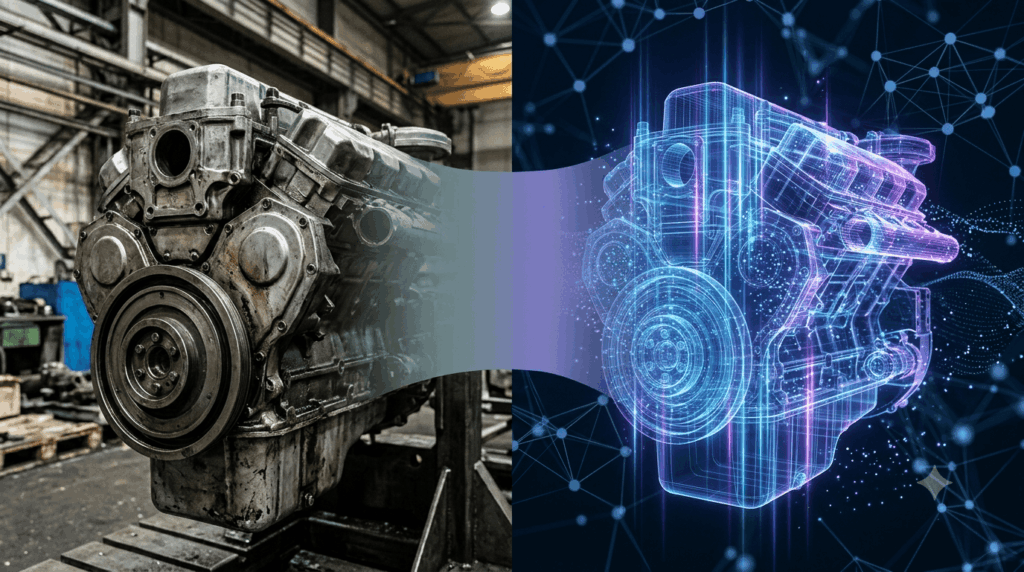
As engineering systems grow more complex, companies are increasingly turning to digital twins to bridge the gap between physical assets and the digital intelligence layer that monitors, predicts, and optimizes them. A digital twin is a virtual replica of a physical system, continuously updated with real-world sensor data, allowing engineers to simulate behavior, anticipate failures, and test changes without touching the actual hardware.
What started as a niche concept in aerospace and high-end manufacturing has now become a mainstream strategy across industries — from energy and utilities to EPC and healthcare. The reason is simple: digital twins turn maintenance, design, and operations from reactive guesswork into proactive, data-driven decision-making.
Why Digital Twins Matter Now
The convergence of IoT sensors, cloud computing, and AI/ML models has made digital twins far more accurate and accessible than they were even a few years ago. Sensors have become cheaper and more reliable, cloud infrastructure can handle massive streams of real-time data, and ML models can now learn complex physical behaviors directly from that data rather than relying purely on hand-built simulations.
Manufacturing plants, energy grids, and EPC projects are using digital twins to reduce downtime, cut commissioning time, and validate design decisions earlier in the lifecycle. The result is a tighter feedback loop between how a system is designed, how it actually performs, and how it can be improved.
How a Digital Twin is Built
Building an effective digital twin typically involves three layers working together:
- Data Layer: IoT sensors and historical records capture real-time and historical performance data from the physical asset.
- Model Layer: Physics-based models, ML models, or a hybrid of both simulate the asset’s behavior under different conditions.
- Decision Layer: Dashboards, alerts, and increasingly autonomous systems translate model outputs into actionable recommendations for engineers and operators.
The strongest digital twin implementations don’t rely on AI/ML alone — they combine domain engineering knowledge (physics, materials science, process design) with data-driven models, so the twin remains accurate even in conditions where historical data is sparse.
Key Applications
- Predictive Maintenance: Sensor data feeds ML models that flag anomalies before they cause downtime, shifting maintenance from calendar-based to condition-based.
- Process Optimization: Engineers simulate “what-if” scenarios — adjusting temperature, load, or throughput — to find the most efficient operating parameters without disrupting live operations.
- Design Validation: EPC teams test structural and thermal behavior virtually before committing to physical builds, reducing costly rework.
- Training and Simulation: Operators can practice on a digital twin under rare or hazardous conditions without any real-world risk.
Challenges to Watch For
Digital twins aren’t plug-and-play. Common hurdles include inconsistent sensor data quality, the cost of instrumenting legacy equipment, and the difficulty of keeping a twin’s model accurate as the physical asset ages or is modified. Organizations that succeed typically start with a narrow, high-value use case — a single critical machine or process line — before scaling the approach across a facility.
The Road Ahead
As multimodal AI models mature, digital twins will move beyond passive monitoring toward autonomous decision-making — recommending or even executing corrective actions in real time. For engineering-heavy industries, this represents one of the clearest near-term paths to measurable ROI from AI investment, and a foundation for the broader shift toward self-optimizing physical systems.